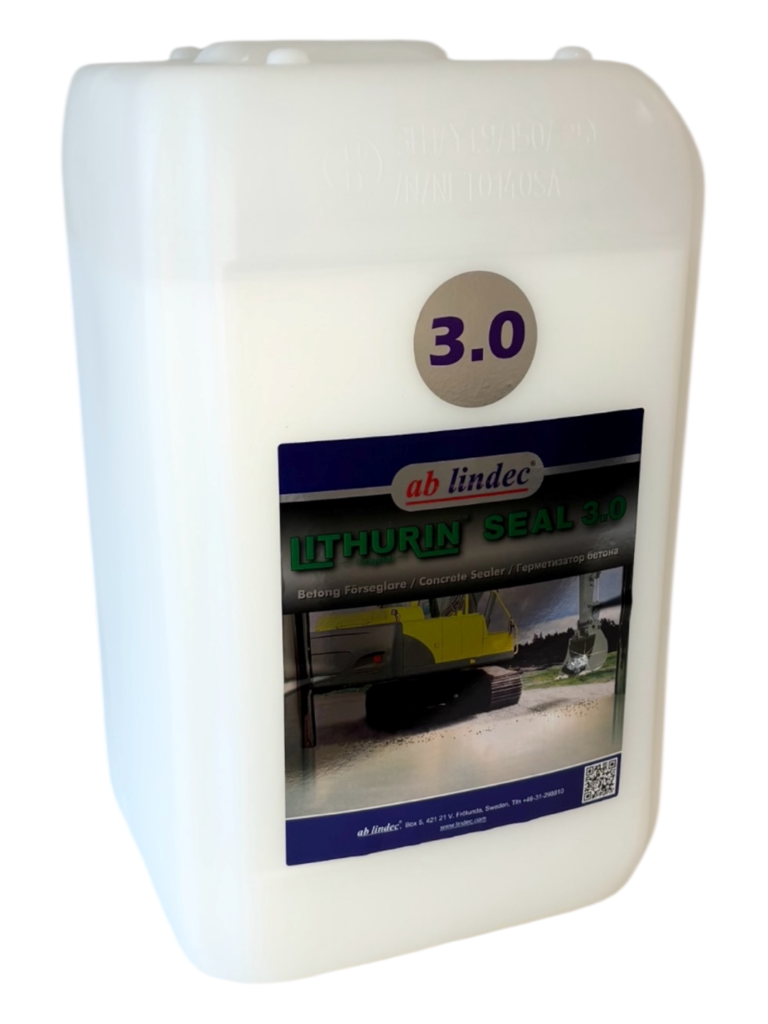
Concrete floor dustbinding – Durable, Hard-Wearing and Cost-Effective
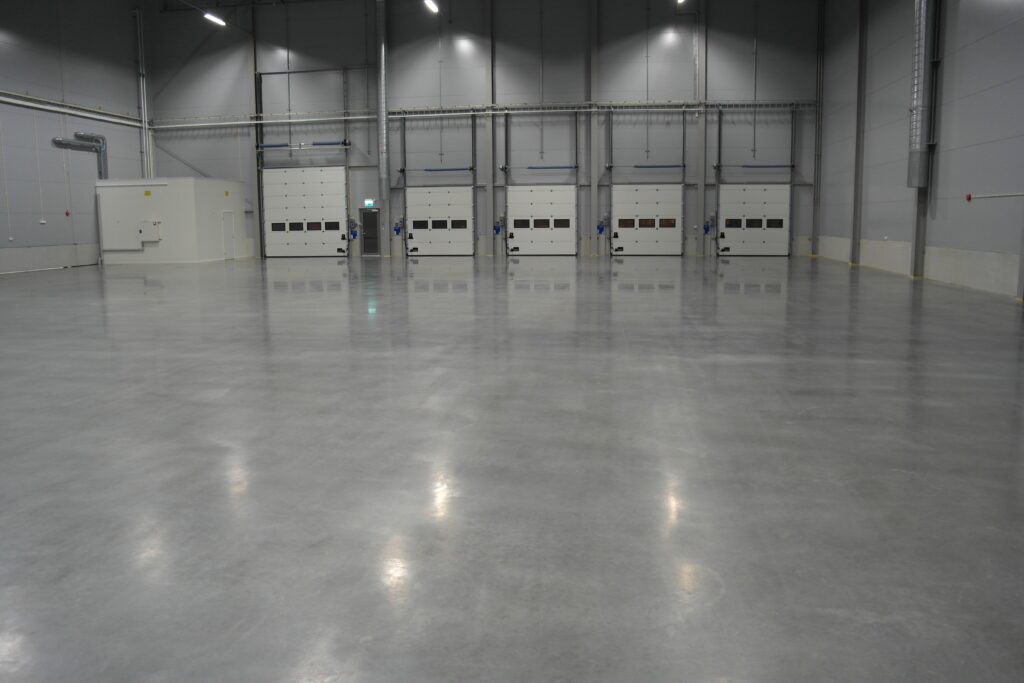
Industrial concrete dustbinding strengthens, protects, and extends the service life of concrete floors in industrial facilities, warehouses, retail premises, and public environments. Untreated concrete floors are prone to dusting, which negatively affects workplace safety, hygiene, and maintenance costs. By applying professional industrial concrete dustbinding, the floor surface becomes dense, hardened, and highly resistant to daily traffic.
What Does Industrial Concrete Dustbinding Involve?
Dustbinding involves applying a specially formulated treatment that penetrates the surface layer of the concrete. The product reacts chemically with free calcium hydroxide (lime) in the cement matrix, forming additional calcium silicate hydrate (C-S-H) that creates a harder and more durable surface. As a result, the floor no longer releases dust particles when exposed to traffic and mechanical loads.
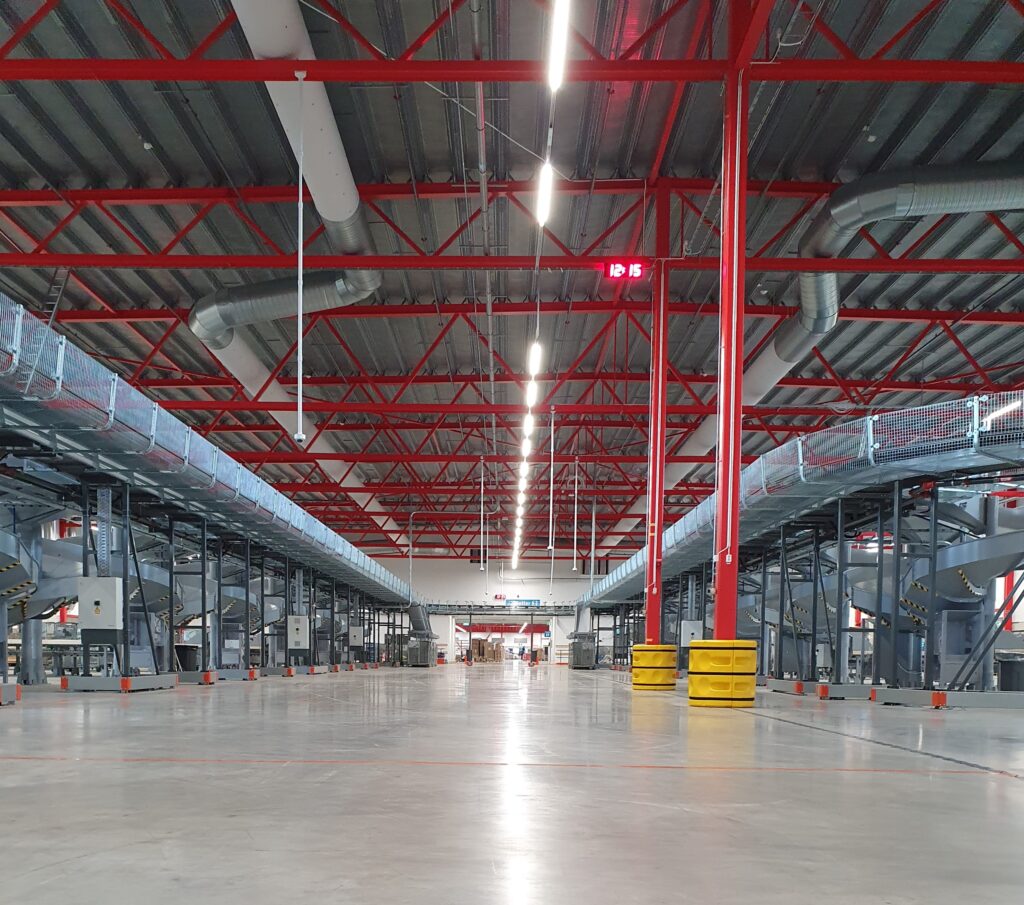
This is particularly important in environments with forklift traffic, machinery, and high levels of movement. Once the surface is strengthened through industrial dustbinding, abrasion is significantly reduced, and the floor performs effectively for a longer period. In addition, dustbinding improves the working environment by reducing airborne dust and simplifying maintenance.
Benefits of Industrial Concrete Dustbinding
Industrial concrete dustbinding offers several clear benefits:
- Reduces dust formation and improves indoor air quality
- Enhances the working environment for employees and visitors
- Increases floor durability and abrasion resistance
- Lowers maintenance and cleaning costs
- Extends the service life of the concrete floor
Dustbinding creates a dust-free environment that protects both the concrete surface and surrounding equipment, while reducing wear on machinery and ventilation systems. Less dust also results in easier cleaning and fewer operational disruptions.
Why Do Companies Choose Industrial Concrete Dustbinding?
Many companies choose industrial concrete dustbinding because the method is cost-effective compared to installing new surface coatings. The treatment preserves the natural appearance of the concrete and provides a more even, professional finish. Dustbinding strengthens the surface layer without altering the structural integrity of the slab, making the method both economical and efficient.
An important advantage is that industrial dustbinding can be applied to both newly poured and existing concrete floors. For newly installed floors, the treatment provides early surface protection and reduces future dust formation. For older floors, it binds existing dust, counteracts continued surface deterioration, and effectively revitalizes the floor without extensive renovation. Industrial dustbinding is therefore suitable for both new and aging concrete floors, making it a flexible and practical solution.
For industrial floors with high durability and environmental requirements, dustbinding provides a long-term solution. The floor withstands daily wear from forklifts, pallet racking systems, and heavy loads. At the same time, the method improves the indoor environment through reduced dust dispersion and simplified cleaning.
A Long-Term Investment
Investing in industrial concrete dustbinding strengthens the floor surface, reduces future costs, and creates a more sustainable working environment. With the correct system and professional application, you achieve a hard-wearing, low-maintenance, and dust-free concrete floor designed for long-term performance.
Industrial concrete dustbinding is therefore a natural choice for businesses seeking to combine functionality, cost-efficiency, and quality.
It is important to complement the treatment with an effective cleaning system. See more about our products at www.lindec.com
Visit us AB Lindec, Femvägsskälet 3, 421 50, Västra Frölunda, SWEDEN